
Intern Spotlight: Jasmine Anuntarungsun
Hello! My name is Jasmine Anuntarungsun, and I am a senior at Northeastern Illinois University studying Sociology and Marketing. I joined the Friends of the Parks team at the beginning of March as a communications intern.
I was drawn to Friends of the Parks because of its long history of advocacy for equitable, community-centered public spaces across Chicago. As someone who has grown up in and loves this city, I’ve seen both the strength of Chicago’s neighborhoods and the inequalities that continue to shape them.
FOTP’s focus on expanding access, addressing environmental justice, and responding to development pressures reflects the kind of advocacy I believe is necessary to build a more equitable city. Supporting parks means supporting the health, identity, and well-being of the communities connected to them, and that mission is what made FOTP feel like a meaningful place to contribute and learn.
One of my first projects involved speaking with friends and fellow community members about a simple but important question: if you could invest $500,000 into a Chicago park, which park would you choose and why? Inspired by the Chicago Park District’s community-led funding initiative, these conversations became an opportunity to hear directly from residents about the spaces they value and the changes they hope to see in their neighborhoods.
Using those interviews, I created a zine that brings together different perspectives on what makes parks feel welcoming, accessible, and meaningful to the communities around them. The project highlights how residents envision investment in their local parks, from maintenance and programming to safety and environmental improvements. Moving forward, I hope to continue expanding the zine as a platform for documenting community voices and drawing attention to the parks and neighborhoods that deserve greater care, resources, and support.
My next project was helping organize Friends of the Parks’ annual Earth Day event. In the weeks leading up to it, I created Instagram content to help spread the word, bring in volunteers, and strengthen the organization’s online presence. It was exciting to see one of my first posts get shared by other organizations. Since I started posting in late March, the content has reached over 12,000 views, which showed me how much impact digital storytelling can have when it connects with people.
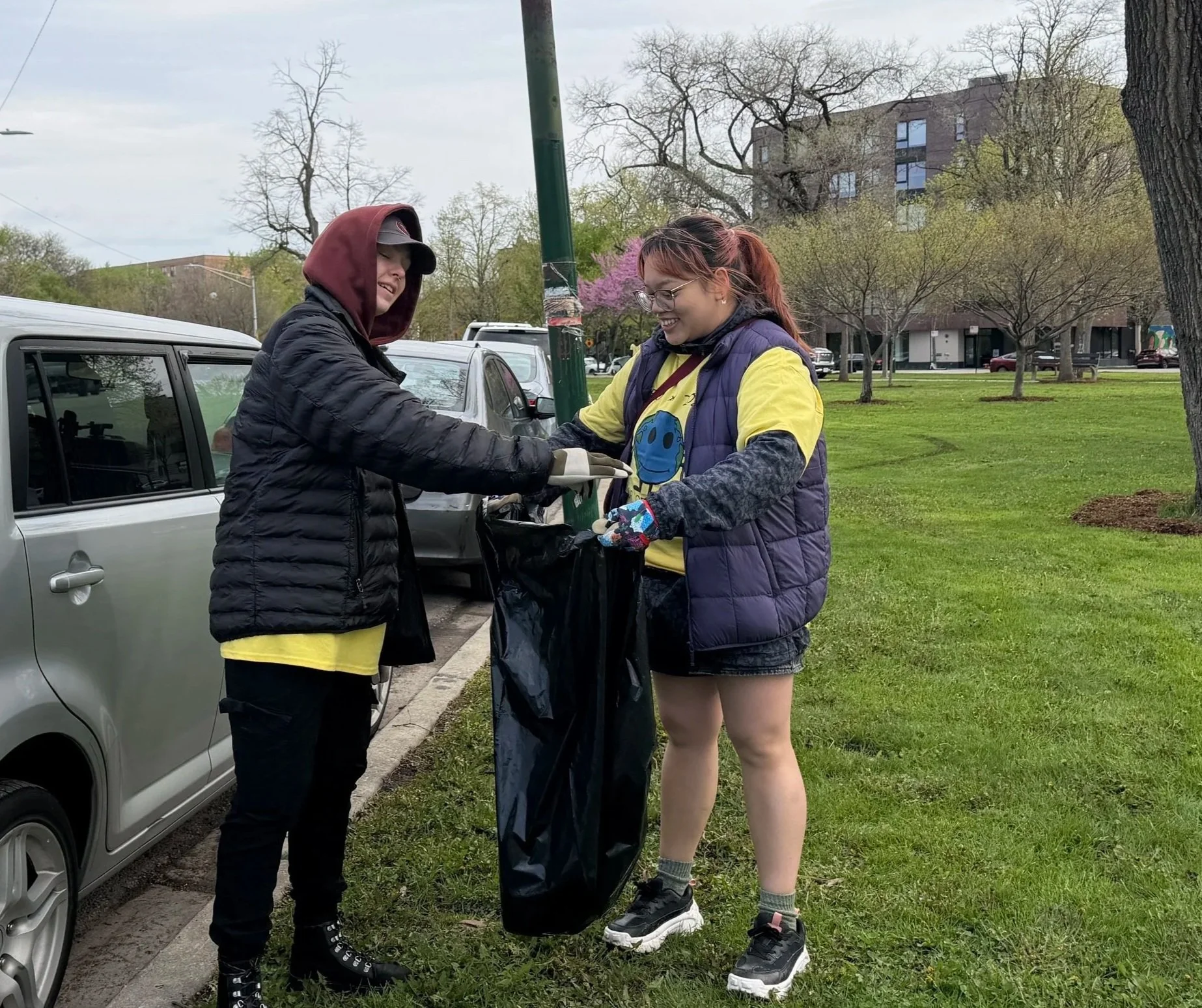
On April 18th, I volunteered at Humboldt Park for the Earth Day event. The day started with speeches from community leaders, including Mayor Brandon Johnson, Alderman Jesse Fuentes, and Friends of the Parks Executive Director Brian Gladstein, which helped set an energizing tone. After that, I spent a few hours picking up trash around the park with other volunteers. While the task was simple, it was a meaningful reminder of how much collective effort goes into keeping Chicago’s parks clean and cared for. One of the biggest surprises of the day was running into some very large worms in the soil!
Later, on April 28th, I joined Egna Setiawan, an Environmental Educator with “Nature Along the Lake” at Northerly Island Park for a field trip program that connects students to Chicago’s lakefront through hands-on environmental education. The program brings students outdoors to explore local ecosystems, learn about environmental issues, and understand their relationship to the city’s natural spaces.
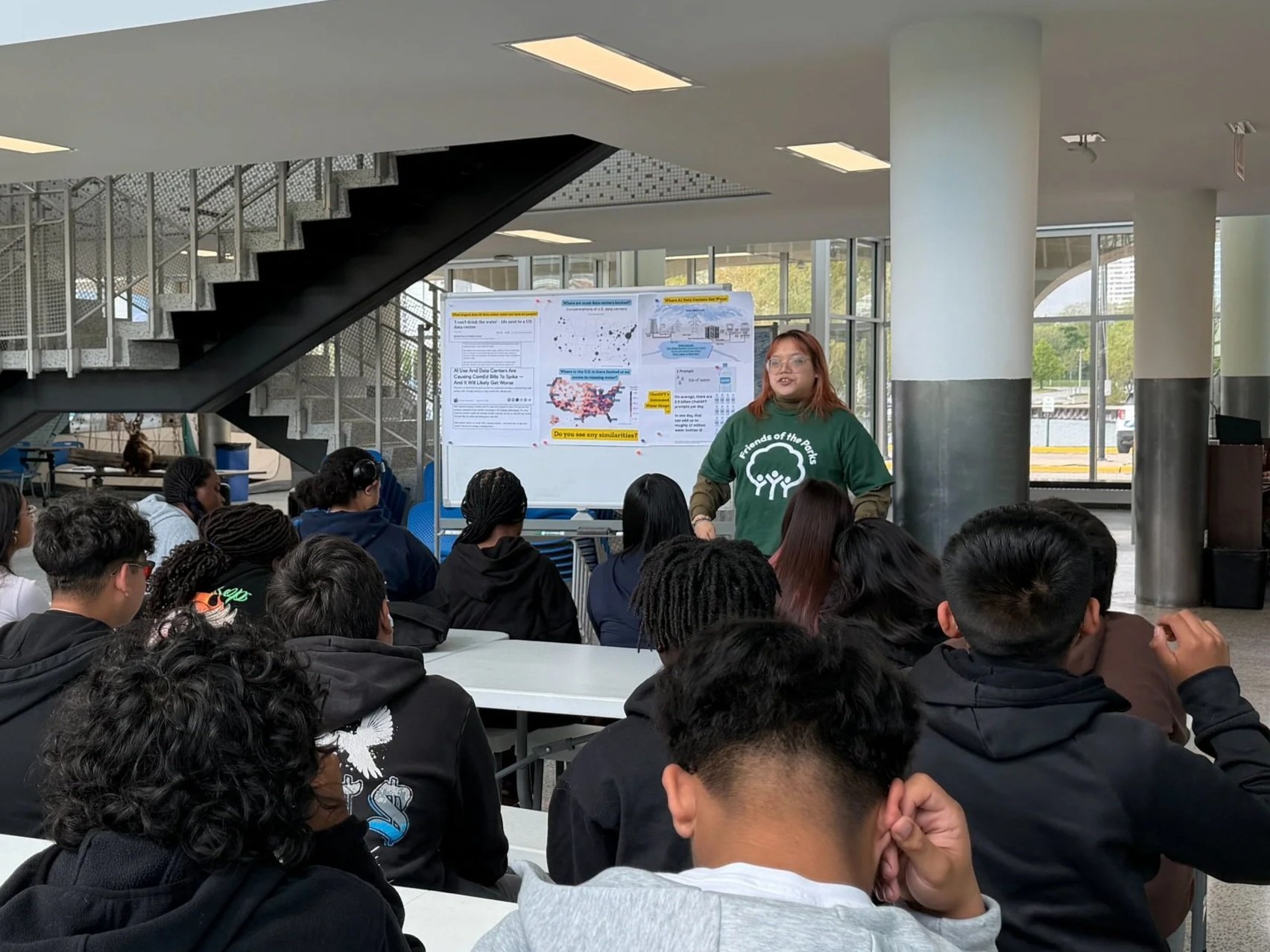
We worked with a group of 6th graders from Otis Elementary School during their visit. As part of the field trip, I led a short discussion about AI data centers and water consumption, aiming to get students thinking about the environmental impacts of emerging technologies and the resources they depend on.
Overall, my internship so far has given me the opportunity to combine storytelling, advocacy, and community engagement in ways that feel both creative and grounded in real impact. It’s also pushed me to think more critically about what equity actually looks like in practice. A park might be labeled as “accessible for all,” but that doesn’t always reflect reality if there aren’t reliable bus routes nearby or if parking is expensive and creates another barrier to entry.
These experiences have helped me understand that access isn’t just about whether a space exists, but whether people can realistically get there and feel welcome once they do. Moving forward, I’ll carry that perspective into how I think about public space, environmental justice, and community storytelling, focusing not just on visibility, but on the systems that shape who actually gets to use and benefit from these spaces.